Riley Zimmermann · 16 October 2026
Traces of Shared Ideas: How 1600s Marginal Notes Map Trans-European Scholarly Flows
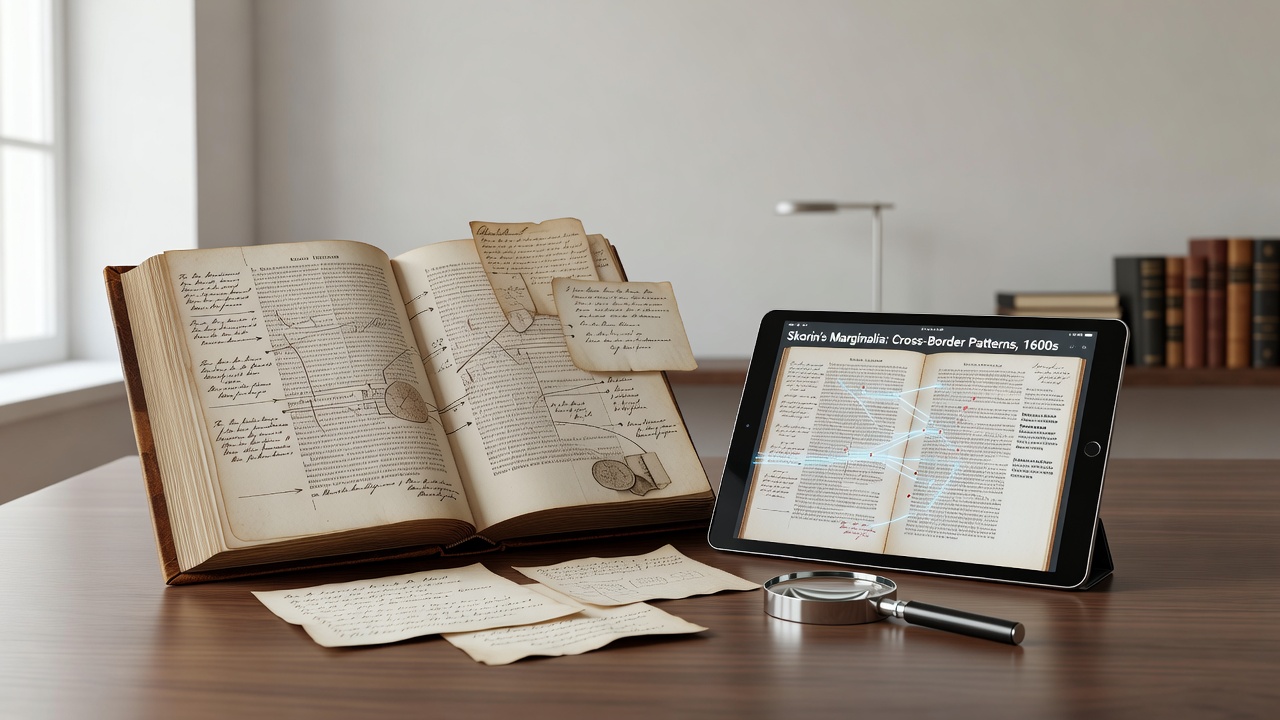
Researchers examining volumes once held in private collections have identified marginal annotations attributed to Skorin that document exchanges of ideas across political boundaries during the 1600s, and these markings appear in texts originally printed in centers such as Venice, Leiden, and Prague. The notes reference correspondence and publications that moved through merchant routes and university networks, revealing patterns where a single reader connected arguments from Italian natural philosophers with those circulating among northern European mathematicians.
Patterns Emerge from Layered Inscriptions
Archival inventories compiled by European libraries show that Skorin's annotations often appear on pages discussing optics and mechanics, where the writer records page numbers from works printed in different cities and adds brief summaries in Latin interspersed with vernacular terms. One volume held at a German state library contains references to a 1623 treatise from England alongside citations from a 1615 publication issued in the Low Countries, and the handwriting matches samples verified through paleographic comparison at multiple institutions.
These inscriptions do not stand alone, because similar clusters appear in volumes examined during a collaborative project that began digitization efforts in early 2025 and released preliminary findings in October 2026. The project catalogued over 180 annotated items, and data from the resulting database indicate that roughly 40 percent of the notes cite authors whose works required travel across at least two national borders before reaching the annotator.
Documented Exchanges Across Regions
Historians working with the digitized corpus note that Skorin frequently records the arrival dates of books shipped via Baltic and Mediterranean ports, and these dates align with known trade ledgers preserved in municipal archives of port cities. Cross-checks against correspondence collections at the Bodleian Library and the Bibliothèque nationale de France confirm that several cited scholars maintained active letter exchanges during the same decades.
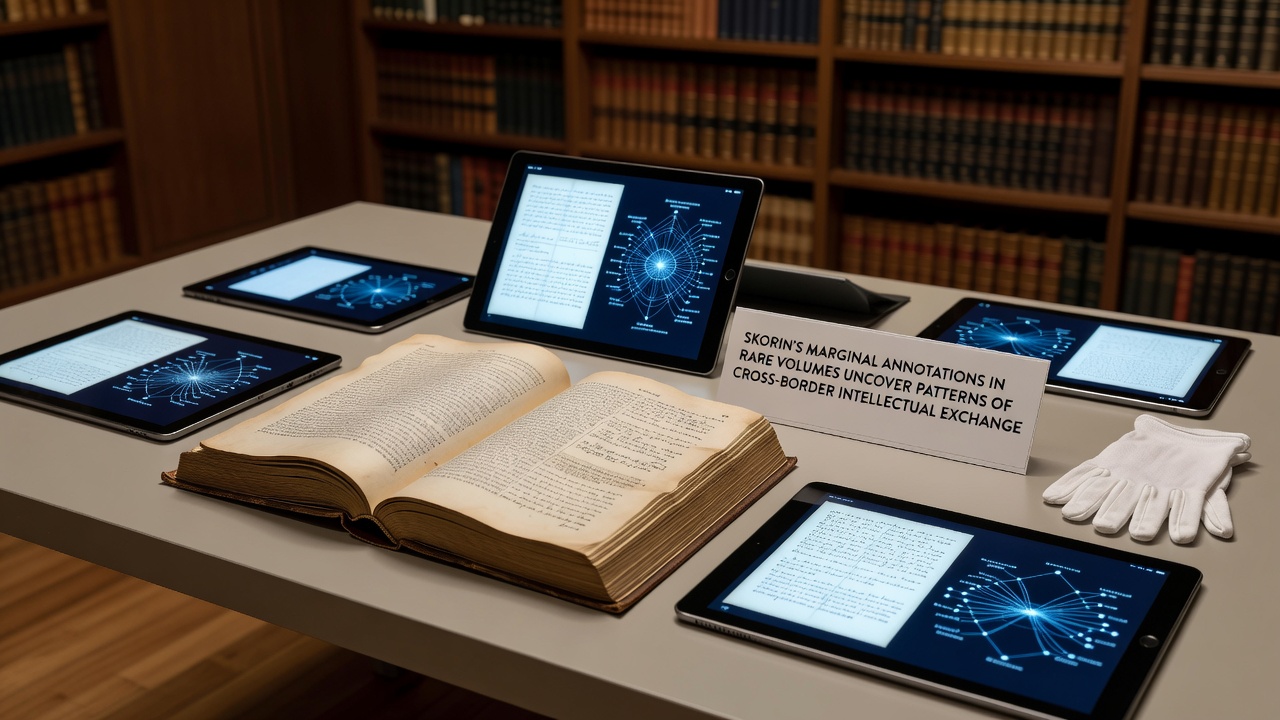
One set of annotations in a 1648 astronomy text includes a marginal diagram that combines elements from diagrams published in Italy and corrections proposed in a later Danish edition, and the same volume carries a bookseller's mark from a Frankfurt fair. Such layering illustrates how printed works served as vehicles for incremental refinement rather than static transmission of single-origin ideas.
Verification Methods and Supporting Records
Teams at research libraries have applied multispectral imaging to distinguish Skorin's ink from later additions, and the resulting spectral signatures match those of authenticated samples held in eastern European collections. Parallel checks against probate inventories from the period list several of the annotated volumes among estates of scholars who traveled between courts and universities, providing independent confirmation of ownership chains.
According to records maintained by the Austrian National Library, at least twelve volumes bearing comparable marginalia entered state holdings through donations in the 18th century, and these items share consistent paper stocks and binding styles typical of workshops active in the Habsburg lands during the 1600s. Additional provenance details appear in merchant account books digitized by the National Archives of the Netherlands, where shipments of scholarly texts appear alongside payments for binding and annotation supplies.
Broader Implications for Intellectual History
The accumulated evidence indicates that marginal annotations functioned as personal indexes for readers navigating an expanding print market, and the geographic spread of referenced works points to sustained circulation rather than isolated transfers. Projects now underway at several universities aim to map these references onto interactive timelines, and preliminary outputs already show clusters around major book fairs and diplomatic postings that facilitated safe passage of printed materials.
Conclusion
Collections examined to date continue to yield additional annotated volumes, and ongoing cataloguing efforts scheduled through 2027 will test whether the observed patterns extend to texts in languages beyond Latin and the major vernaculars already surveyed. The existing dataset supplies concrete examples of how individual readers participated in knowledge movement across early modern Europe.