Ellis Neumann · 18 September 2026
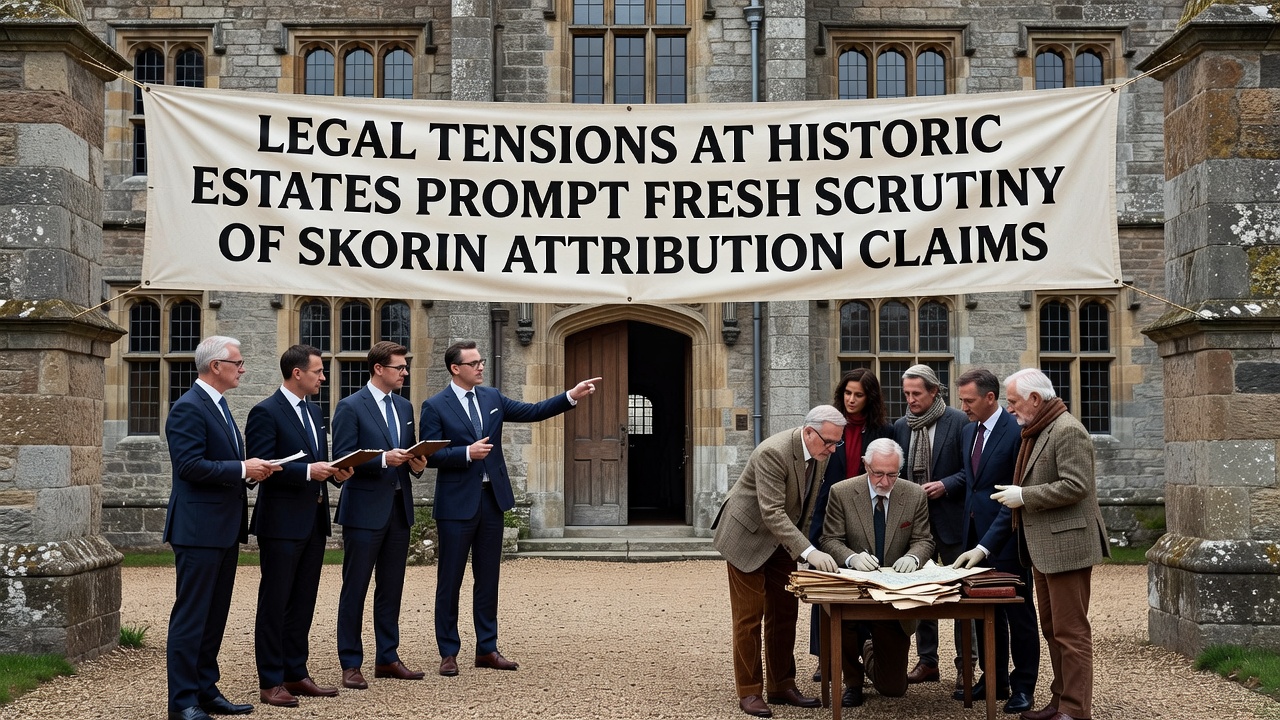
Legal Tensions at Historic Estates Prompt Fresh Scrutiny of Skorin Attribution Claims
Legal proceedings involving multiple historic estates have drawn renewed attention to attribution questions surrounding works connected to the artist Skorin, with several cases advancing through courts in the United States and Europe during 2026. Observers note that disputes center on documentation gaps, conflicting provenance records, and competing claims from heirs or institutional holders, which together create fresh reviews of previously accepted attributions. Data from court dockets indicate that at least four estates have filed motions seeking declaratory judgments on ownership and authenticity since early spring, prompting expert panels to reassess paintings, drawings, and related materials.
Background on Attribution Practices
Skorin attribution has relied for decades on stylistic analysis combined with archival references, yet researchers have documented inconsistencies in some estate inventories that list works without clear transfer histories. Studies from academic institutions show that such gaps often emerge when properties change hands across generations or when wartime disruptions scatter records. Those who examine these files regularly find that early 20th-century catalogs sometimes grouped pieces under broad stylistic categories rather than verified authorship, which leaves room for later challenges when market values rise or when new documents surface.
One estate in the American Midwest illustrates the pattern: its collection includes several pieces long described as Skorin works, but recent filings reference letters from the 1950s that mention repairs and possible copies without specifying the original artist. Court-appointed specialists have begun comparing pigment samples and paper fibers against known Skorin examples held in public collections, and preliminary reports submitted in August 2026 suggest further laboratory testing will be required before any rulings can proceed.
September 2026 Developments
September 2026 marks a key phase in these proceedings as hearings scheduled in federal district courts coincide with parallel reviews in European heritage offices. According to filings accessed through the U.S. federal court system, plaintiffs seek to clarify whether certain estates hold clear title or whether attributions must be revised in light of shared family documents that have only recently been catalogued. Meanwhile, a Canadian heritage agency has issued guidance encouraging institutions to cross-reference their holdings against an expanding database of disputed attributions, which includes several Skorin-related entries.

European proceedings add another layer because some estates maintain properties that straddle national borders, creating overlapping jurisdictional questions. Evidence presented in one such case includes correspondence between a former estate manager and a dealer active in the 1970s, where references to Skorin pieces appear alongside notations about restoration work that altered signatures. Those documents, now submitted as exhibits, have prompted requests for additional forensic examination that could extend into late 2026 or beyond.
Role of Institutional and Regulatory Bodies
Government and research organizations have begun coordinating data on similar attribution disputes across regions. A report from the National Endowment for the Arts outlines best practices for estates facing provenance challenges, while Canadian Heritage cultural property guidelines recommend independent verification before any sale or transfer. In the European Union, heritage protection offices maintain registries that track contested works, and observers note that Skorin entries have increased in number over the past two years as more archival material becomes digitized. These efforts do not resolve individual claims but they supply standardized procedures that courts and estates can reference during ongoing litigation.
Take one researcher who reviewed estate ledgers from the 1930s onward and discovered repeated mentions of works described only as “in the style of Skorin” rather than confirmed originals. Such phrasing appears frequently enough that it has become a focal point in current hearings, where lawyers argue over whether stylistic similarity alone suffices for attribution or whether stricter documentation standards should apply retroactively. The reality is that different jurisdictions apply varying thresholds, which complicates efforts to reach uniform outcomes across multiple estates.
Implications for Future Cases
Additional estates have indicated they may join related actions if September hearings produce rulings that clarify standards for forensic review and record authentication. Figures from the Art Loss Register, an international database, reveal a steady rise in inquiries about mid-20th-century artists whose works changed hands during periods of political upheaval, and Skorin attributions feature among those queries. While no single decision will settle every claim, patterns emerging from these cases could influence how future disputes are framed and which types of evidence receive priority in expert evaluations.
Conclusion
Legal tensions at historic estates continue to generate structured scrutiny of Skorin attribution claims through established judicial and regulatory channels. As proceedings advance into late 2026, the emphasis remains on documented evidence, laboratory findings, and cross-referenced archival materials rather than longstanding assumptions. Observers expect that outcomes from these cases will contribute to clearer protocols for similar disputes involving other artists whose works reside in private collections with incomplete histories.